
Exhibition
I shut my eyes and all the world drops dead
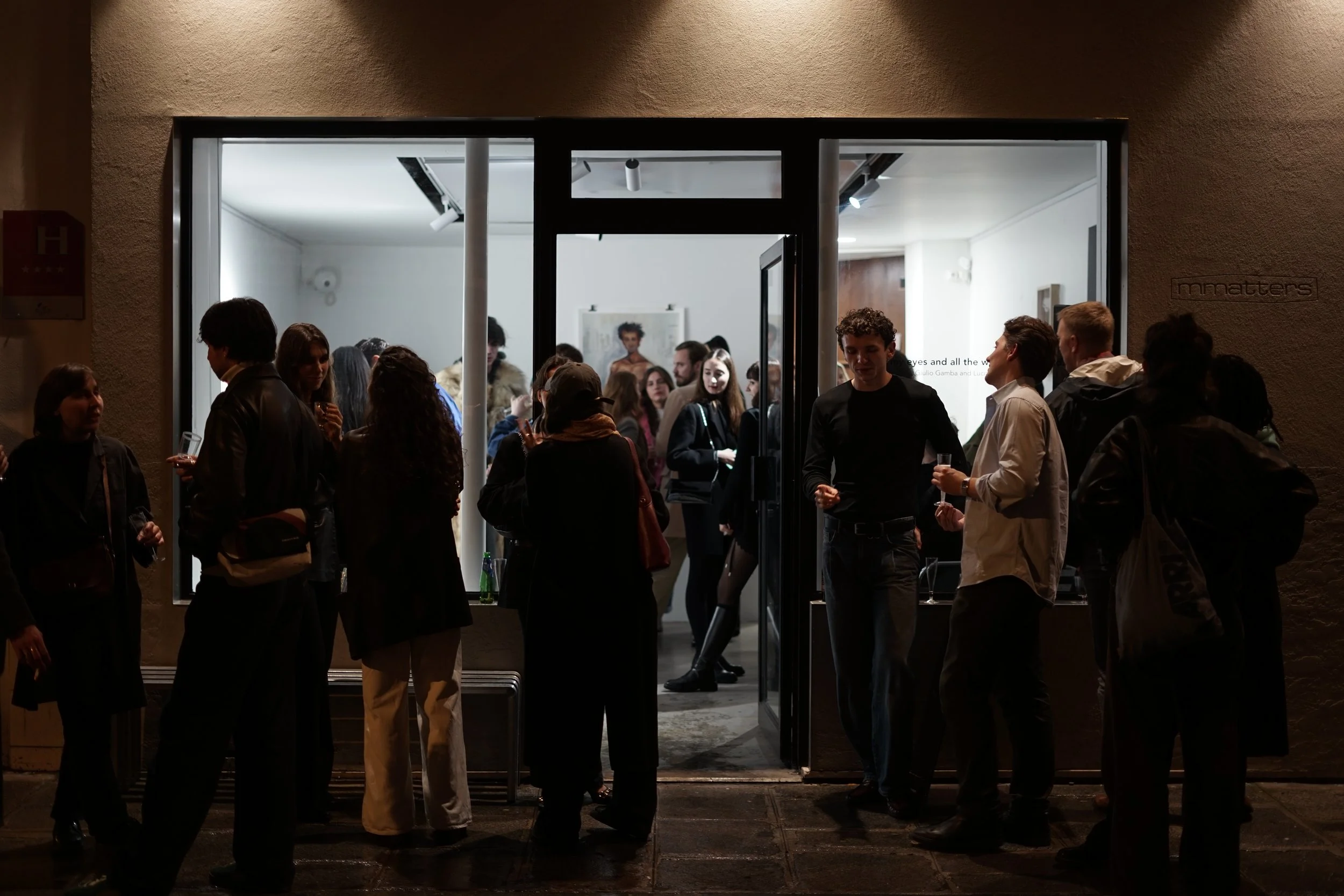
Refusés is pleased to present I shut my eyes and all the world drops dead, a group show featuring Andrea Popovic, Giulio Gamba and Lucia Martinez Garcia. A reference to Sylvia Plath's poem 'Mad Girl's Love Song', this exhibition suggests the arts provide a space to take profoundly inner experiences into the public forum, allowing individuals to share, reflect on, and process private realities within a communal, safe space. As part of Refusés' inaugural programming, each exhibition offers one answer to the cardinal question of what is the purpose of art? The first exhibition explored art as community building. I shut my eyes and all the world drops dead, aligns itself with Aristotle's Poetics, which argues that art serves as catharsis, a vehicle for an emotional response from the viewer which allows us to learn more about human nature. Through painting, writing and video, this exhibition illustrates how private emotions and personal narratives shared publicly in the form of art, can transition from being confined to the artist's subjective experience and become part of a broader dialogue.
Andrea Popovic's gripping portraits transform private moments into shared experiences, inviting the viewer to engage with the intimacy of his encounters. His close-cropped paintings, rendered in a quick and gestural style, feel like windows into his studio—a space where the sitters reveal themselves not only to the artist but also to the audience. Painting his friends, family and partner, the artist leans on these portraits as a way to literally slow down time and study his relationships with the person in front of him. By bringing these personal exchanges into the public realm, Popovic's work creates a communal space for reflection, where even something as personal as a portrait of a loved one becomes open to interpretation. The painter's use of a traditional medium imbues permanence into fleeting encounters, yet his stylized approach makes these moments feel both deeply specific and universally accessible. As a result, each portrait exists in a liminal space, where it is simultaneously private and public, individual yet relatable, inviting viewers to project their own narratives and emotions onto the work. The safety of his studio as the connecting thread, each individual painting invites open communal reflection.
Giulio Gamba's work explores human self definition. Drawing from everyday sources—phrases on city walls, books, and advertisements—Gamba assembles an archive of content that makes visible what often goes unseen. This activation is central to Gamba's practice, as he lends his voice to each plate, which in turn speaks directly to the viewer. For him, this act of listening and responding allows a further exploration of what drives human interconnection. These objects clamor for attention, underscoring the tension between private thought and public display, and emphasizing the need for an active engagement with our surroundings to uncover the hidden layers of our existence. By inviting viewers to engage with and reshape his reflections, which are themselves simply extracted from our everyday lives, Gamba pulls the viewer into the intimacy of his mind. However, these works also serve as a foil for the audience, a surface against which they can bounce their own interpretations and experiences. Through this interplay, the viewer is not only confronted with the artist's thoughts but also with a mirror that reflects their own.
Finally, Lucia Martinez Garcia's video brings the audience into the inner universe of a woman as she navigates her relationship. The use of close ups and anxiety-inducing loop footage pulls the viewer into the crux of this private emotional turmoil she is experiencing. It feels uncomfortable to sit in on this scene, like listening in on a phone call you're not supposed to hear. Yet the mystical quality and soft aesthetics of the work make it difficult to look away, Martinez Garcia triggers our human nosy-ness and makes us sit in the discomfort. The audience is trespassing the intimacy of this couple and specifically of this woman's potentially violent experience. The artist turns this disturbing act of witnessing a difficult situation into a wonderful, ethereal and soft work of art that we are happy to sit through, whereby clueing us into the psychological escapism happening in the video. Through this work, Martinez Garcia creates a space for the audience to reflect on an otherwise very difficult subject matter.
In all of these pieces, art becomes a mirror of internal states, making the intangible (feelings, thoughts, memories) visible and communicable. The artists navigate the complexities of personal, internal landscapes, in return they provide a visual framework through which the public can process their own emotions. Much like Plath's tumultuous inner world is worked out with pen and paper and offered up for communal reflection in 'Mad Girl's Love Song', art can be a vehicle for externalizing the private, and using its place in the public realm to learn more about human relations.
Date
October 2024
Location
Paris, France
Artists
- Andrea Popovic
- Giulio Gamba
- Lucia Martinez Garcia
Interested in works from this exhibition?